

When we first landed in Singapore, I joined a few expat Facebook groups to get local tips and advice from women already living there. It’s hands down the best way to get the lay of the land and hit the ground running in your new country.
One of the hardest parts of moving abroad is simply not knowing where anything is! In those first few weeks you have so much to get organized you don’t have time to waste. You can easily spend hours glued to your phone just trying to figure out where to buy basic household essentials in a country without a Target, Kmart, or Tesco to run to. And good luck finding where to get new keys cut or buy a hammer without a Bunnings, B&Q, or Home Depot just around the corner!
Facebook groups cut your research time in half.
You’ll find everything you need to know from recommendations for great neighbourhoods to live and reviews of specific apartment buildings, to where to buy furniture or appliances and find a reputable handy man. Plus get amazing ideas for date nights and things to do with kids when it’s raining. Or the best options for summer camps during the school holiday breaks.
No question is too big or small for the group! The insight you’ll get is first hand straight from the source.
Often, my basic questions had already been asked, and it felt like tapping into a goldmine of real-life knowledge from women who had already walked the path I was just beginning.

Here is an example of how Singapore Expat groups worked: From this post I received a video call from a woman I knew in the group to say she saw my post and was at the Singapore Zoo today. “Janel, I’m here in the Zoo gift shop – which stuffed animals can I pick up for you? I’ll walk around and show you what they have.” BLESS HER! I had exactly what I needed in my hands the very next day. The sister-hood is next level.
But to be honest, what I didn’t expect was ALL the “tea” that was spilt in the Facebook groups too. The emotional undercurrent in many of the threads – especially from women talking about the break down of their relationships.
I saw post after post of expat women pouring their hearts out about their marriages falling apart. Confessions of lies, resentment, financial strain, unexpected divorce, false expectations, and the crushing weight of betrayal.
Some had followed their partner’s career abroad and suddenly found themselves isolated, unemployable, and feeling lost in a foreign country with no support system.
Others simply found the weight of homesickness living abroad away from family, friends, and the comforts of home – too much to bear while polar opposite their partner thrived in the experience.
Anxiety and depression were common themes throughout these women’s shared experiences.
That was the moment I realized: No one really talks about how expat life can test even the strongest relationships.
💔 When the “New Adventure” Bubble Pops
In the early days, everything feels fresh and exciting – new city, new food, new experiences. You explore together, problem-solve together, laugh at the confusion and cultural differences. It’s stressful, and exhausting but you’re bonding in the best way you can through the transiton together.
But once ‘real life’ begins – you’re back on commutes, school runs, house admin, job stress, and the “missing the normality of home” sets in, the excitement and those rose-colored glasses start to fade.
And underneath the day-to-day grind, something else can creep in… thoughts of:
- RESENTMENT – “I gave up everything for you to move here!“
- FRUSTRATION – “I wouldn’t have to deal with this crap if you were home more. We never get to see you and all you talk about is work!“
- SADNESS/ENVY – “You’re living your best life in the prime of your career, and I’m here waking up with dread every single day pushed into a job that is LESS THAN my capabilities.“
- LONELINESS – “I spend all day every day alone with the baby. Figuring everything out by myself. I don’t have anyone to support me here, and it’s exhausting trying to hold it all together.“
- ISOLATION – “You have colleagues, purpose, and connection. I have school drop-offs and in between 6 hours of time to fill. I can’t work here, I am trying to make new friends but learning to speak the language is hard! This place still doesn’t feel like home.“
These thoughts are often accompanied by… silence.
We don’t say anything because we don’t want to rock the boat, seem ungrateful, or admit we’re struggling.
So instead, we hold it. And carry it. And then bury it down deep along with our feelings.
Until one day, it comes out in an EXPLOSION – during an argument or difference of opinion over something small, with words we often wish we could take back.
🚩 The Danger of Unspoken Disappointment
The first time something disappoints you, maybe your partner isn’t emotionally present, dismisses a feeling you have, or assumes everything’s fine and can’t read the situation – it’s 100% crucial for the longevity and health of your relationship to address it.
And for your own wellbeing.
Most of us brush our feelings and dissapointments aside:
“It’s not a big deal”, “They’re probably stressed, its not a good time” or “It’s fine, it is what it is I’ll get over it.“
But, what I know from my professional experience working with women in coaching for the past 7 years and learned from 15 years of marriage (with 3 international moves together!) is this – if your disappointment goes UNRESOLVED it can settle in like a small stone… wedged into your heart.
The next time it happens, it hurts more and the stone grows bigger.
And before long, your unspoken frustrations have turned into bitterness, resentment, or even a total feeling of disconnection from this person you’ve loved.
For the sake of your relationship and your own self-respect, please when something happens say something. Communication is a key priority for the health of your relationship as expats living overseas.
All you have is each other now. Your mind needs to register that you’ve been seen and heard. Your feelings and emotions in this experience matter.
Most importantly, through all of this that you still have a voice.

How to Share Disappointment Without Blame
When you’re ready to address something that’s disapointed, hurt or upset you, try this 5-step communication strategy to help reduce defensiveness and help create a more peaceful resolution:
- Wait for a calm moment to speak your truth
Don’t bring it up when emotions are hightened. Find a quiet time when you both feel present and ready for the conversation. A time where you can “say what you mean, without being mean”. - Describe what happened
Stick to facts: “When we were at dinner, and you were on your phone…“ - Share how it made you feel
Use “I felt” statements instead of “you did this to me” type statements eg) “I felt dismissed and unimportant“ - Ask for what you’d like next time using opening language (very important!)
Offer a solution: “In the future, could we please agree to no phones at the table during meals so we can connect?“ - Check for understanding
Ask gently: “Does that make sense?” or “Can you understand where I am coming from“
This invites them to step into your shoes and reflect back what they’ve heard.

What the Stats Say About Expat Relationships
According to international research done back in 2015, expat divorce rates were on the rise then, particularly among couples where one partner (often the woman) becomes a “trailing spouse.”
The InterNations survey revealed that:
- 65% of trailing spouses feel dissatisfied due to financial dependence
- Only 36% continue their careers post-move, even though 79% had careers before relocating
- Emotional strain, culture shock, and isolation are listed as top stressors for expat couples
According to the more recent InterNations Expat Insider 2023 report, career concerns and lack of support continue to be major challenges for expat partners, with many trailing spouses citing difficulties in finding work, building social connections, and maintaining a sense of purpose abroad.
And without open communication or support, those stressors can quietly unravel any solid relationship.

My Coaching Advice: Communicate Your Needs Clearly
One of the biggest challenges in expat relationships is the unspoken expectations that come with it.
I’ve seen this firsthand in my own life and with the women I’ve coached. The longer you suppress your needs and keep yourself at the bottom of the priority list, the heavier the emotional load becomes.
Clear, honest communication is your most powerful tool. A simple “I’m not coping here and could use your support” works volumes.
As weird as this concept may feel to the most independent woman, when you share your vulnerability and ask for help you give your partner the chance to understand and support you.
Your partner may not realise what you’re carrying, or how frustrated or lonely you are. They may be focused on adapting to their own role or challenges. But most people want to help – they just don’t know how, until you tell them.
Speaking up isn’t weakness. It’s a strength. And in the context of expat life, it can be the difference between growing apart or growing stronger together.
You’ll also feel more validated and no longer alone in the weight of it all.

10 Ways to Keep Your Relationship Healthy as Expats
Here’s what I recommend (and personally practice) to maintain connection, intimacy, and teamwork with my husband in a new country:
- Talk it out – even if it’s awkward and a hard conversation, this is your second most important relationship than the one you have with yourself. Both of you have to put in the time and energy to make it work!
- Do your own inner work – journal, find healthy ways to process stress and your own emotions, reflect on your thoughts and feelings as a priority. This will allow you to communicate your needs more clearly with better impact with your partner. Not much gets resolved when we’re stuck in the “he said / she said” of the problem or you’re trying to resolve an issue when everyone is still in the “red zone”. If this is all new to you, then this is also your reminder to reach out for support with a coach, mentor or therapist to guide you.
- Schedule regular date nights – give your relationship a once a month set time to feel connected. A night where the two of you can go out and have fun, do something romantic, explore a new restaurant, try an activity together. This helps to keep the spark alive. Preferrably without phones, work or distractions! And if you can’t book an evening out due to lack of known babysitters, then ensure you take the opportunity to do something together whenever you get a child-free couple of hours when the kids are at a birthday party or play date.
- Make alone time + social time a priority – balance is always key to your mental health! You are a priority – schedule alone time (if you never get any!) or a night out with new friends at least monthly. Book a visit home to see family, or organize a girls trip to meet old friends somewhere in the world whenever you need it. It’s amazing for the mind to have something fun to look forward to.
- Learn and speak each other’s love language – it helps. If you don’t know what I’m talking about read about it here The 5 Love Languages
- Use kind, open and encouraging words – your tone matters. Gosh, if I had a $1 for everytime my husband has said “It’s your tone Janel” over the last 15 years of marriage, I would be RICHHHH! (lol) I’ve had to learn this one the hard way and practice “saying what I mean… without being mean”.
- Apologize and accept apologies – it builds emotional safety. Honestly, no one ever wins the “blame game” you just get more and more blame. Authenticity is being accountable for your actions, and the more you own your “junk” it’s an example for others to do the same. Also, it’ll do you no good harboring old hurts and problems, then bringing them up every time you argue. All this does is keeps you stuck in the past, instead of moving forward. A heart-felt apology or acceptance of one really goes a long way.
- Express appreciation often – especially for the small stuff. A little positive reinforcement can shift the entire dynamic. And let me ask you – the thing you want most (recognition, love, appreciation, understanding) how good are you at also giving it??
- Have weekly check-ins – very important in the beginning to not be ‘too busy’ to make time for a “how are we doing?” chat over coffee or a meal. Even better make time for a weekly walk or bike ride together!
- Seek couples counselling early – reach out to a professional for support after the first few signs of cracks begin to appear. Don’t ignore it and wait until it’s all breaking wide open to seek help. It’s much harder to mend if the divide has grown so deep, there’s no way to rebuild and find common ground.

Teamwork is what it takes
Expat life abroad CAN stretch and strengthen your relationship like never before. You’re seeing the world and experiencing the th emost exciting highs with the one person you’ve chosen to spend your life with.
But you’ve both got to be willing to show up, speak up, and work through it together. It takes teamwork.
Let go of the pressure, there is no perfect relationship. When the honeymoon is over, you cannot go on pretenting everything’s fine and sweeping the hard stuff under the carpet. Dust builds into mountains.
It takes courage to say, “Hey, I need you to hear me right now and be here for me.“
There will be ups and downs, but remember – you two are the foundation of your family unit. If you commit to staying connected and prioritizing each other, even amidst the chaos and stress, you’ll find your way through everything together.
-JB

REMINDER: You Don’t Have to Navigate This Alone
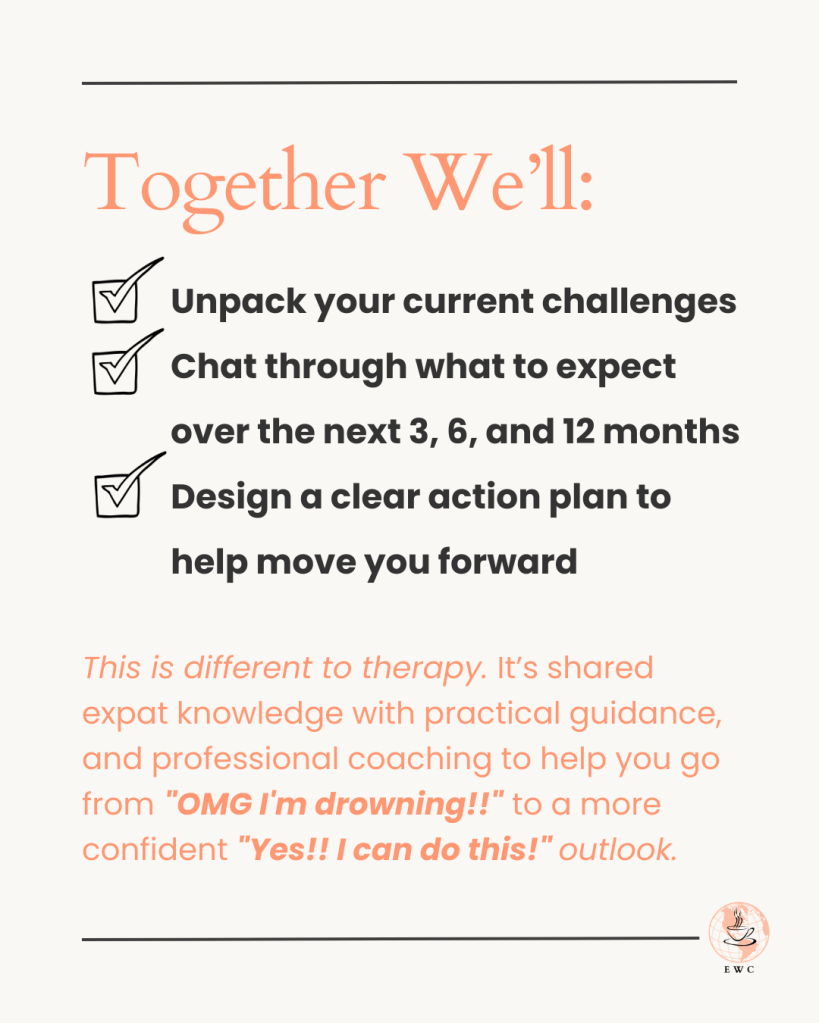
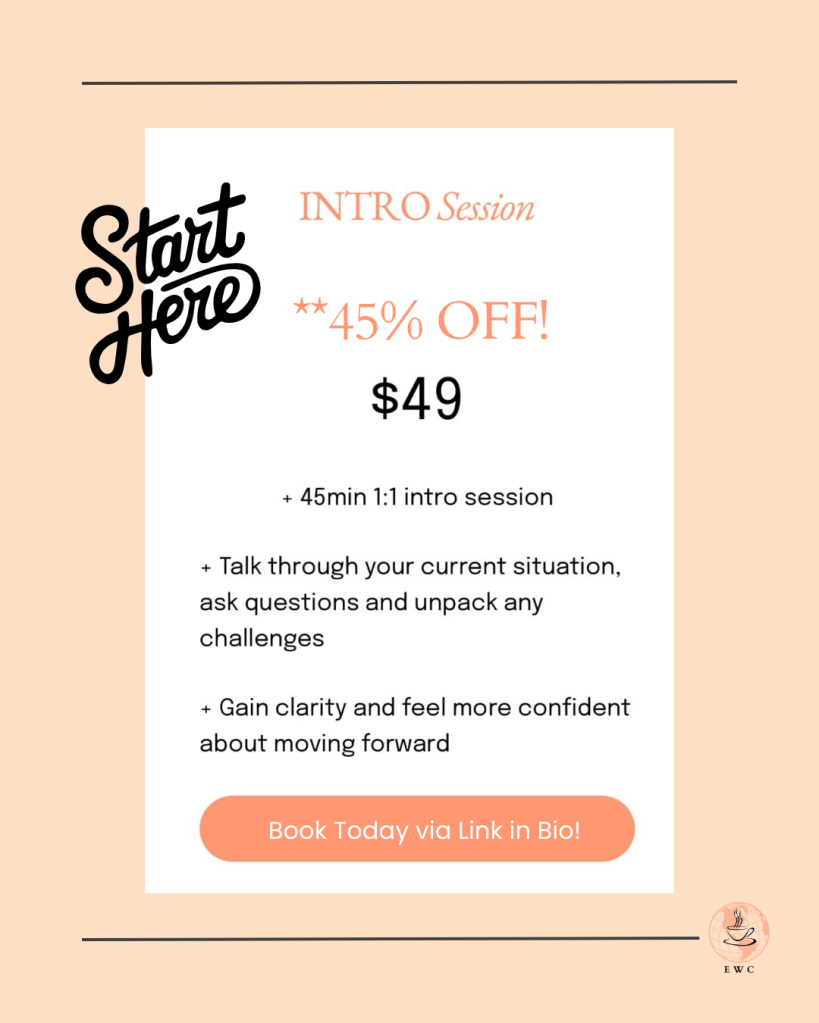
My 1:1 Expat Mentoring sessions are now live — offering personalised support to help you navigate life abroad with more clarity, confidence, and purpose. Book directly on my calendar via link below!

 Expat Women's Collective
Leave a comment